There is a lot that I’m able to learn from my desk in a now-frosty corner of Northern New England, and that remoteness is part of my delight in scanning the world like this. But sometimes I stumble on locations and features that don’t tie easily to ground-level history, news, or anecdotes. This month I bring you a selection of beautiful places that are a mystery to me, but surely not to the folks who live around them.
Arlit, Niger
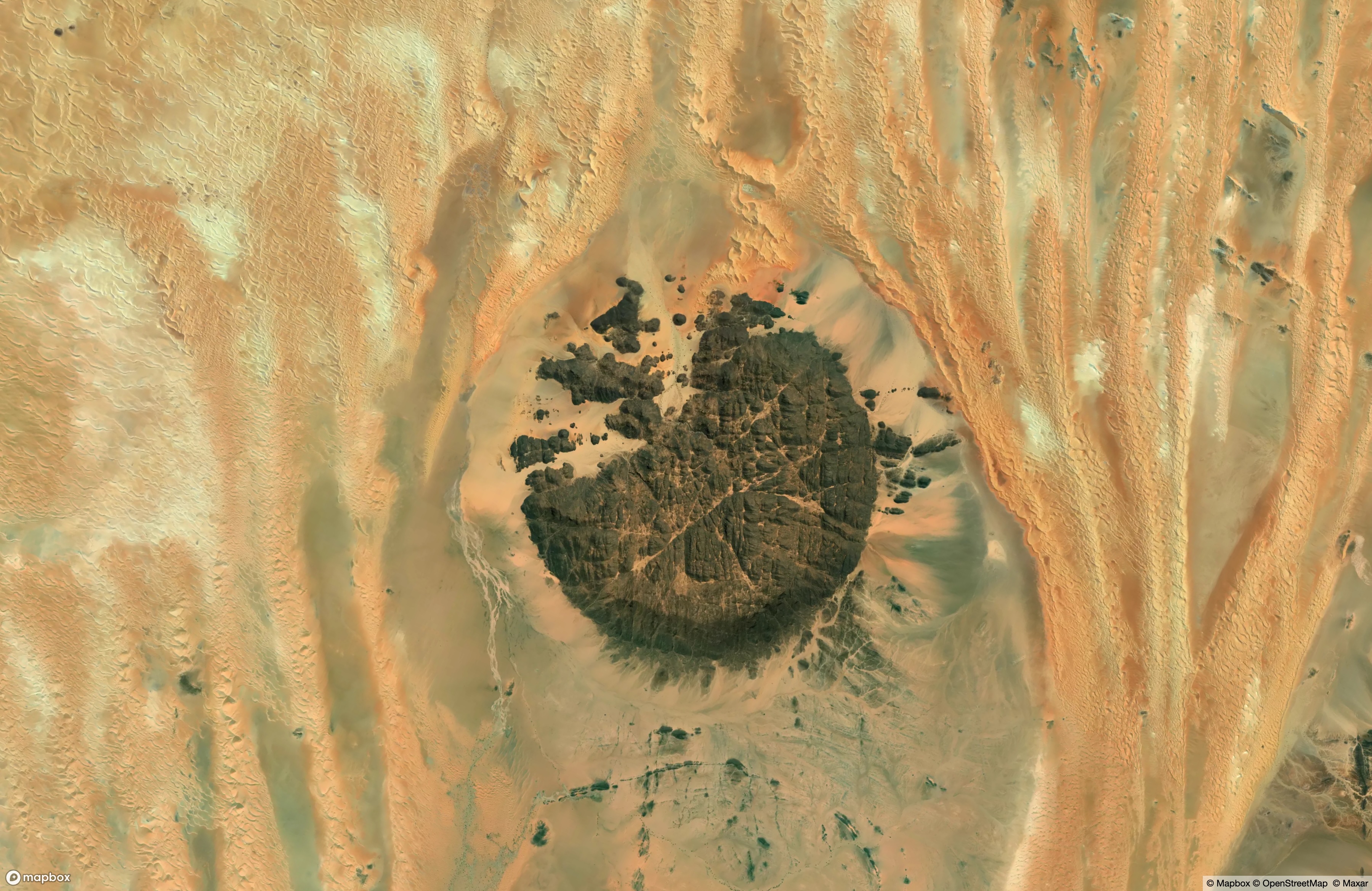
In this remote Saharan corner of the Aïr Mountains - a home of the Touareg people - I have to fall back on geomorphology. This lone, broken disc has the look of a volcanic plug in a since-eroded mountain, flooded all around by sand. There is a nearby historical spring called Tezirzek, with human- and horse-figure petroglyphs that are perhaps three thousand years old. The British Museum - uncharacteristically - does not hold the glyphs themselves, but rather a photograph of them, with the partial description “crudely pecked figure facing forwards” 🙄
Dalian, China
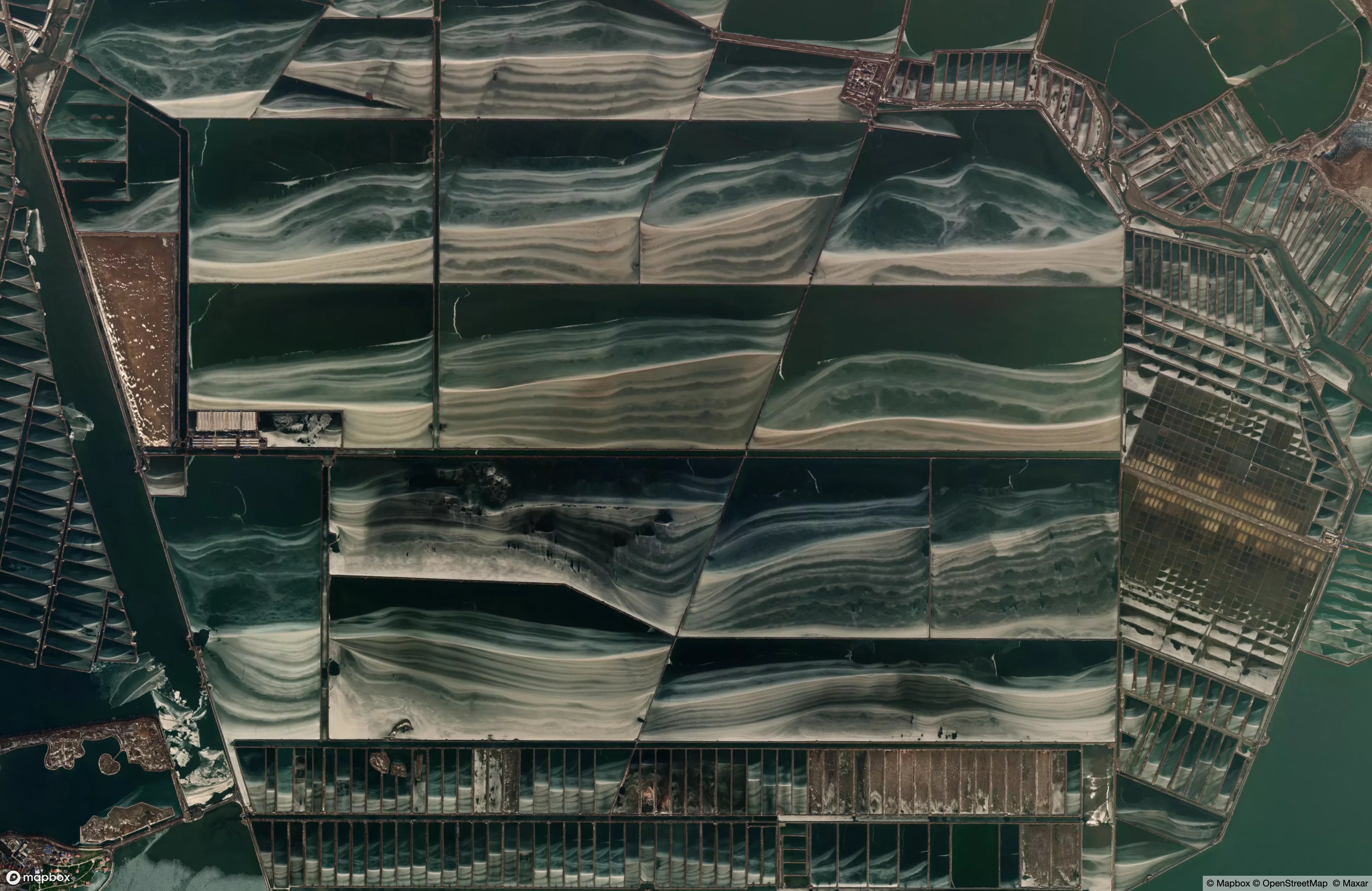
It is surprisingly difficult to find information about specific coastal land use practices around Bohai Bay, which happens to also be one of the most densely-populated regions on Earth. So I am not immediately able to tell if these ponds are producing salt, carp, or sea cucumbers, and I can’t determine if the chartlike wave patterns are a result of silting, prevailing winds, or some other process. A 2024 study using Landsat data found that these facilities are recent arrivals to the coast, only reaching this level of expansiveness in the past decade.
Tierra del Fuego, Chile
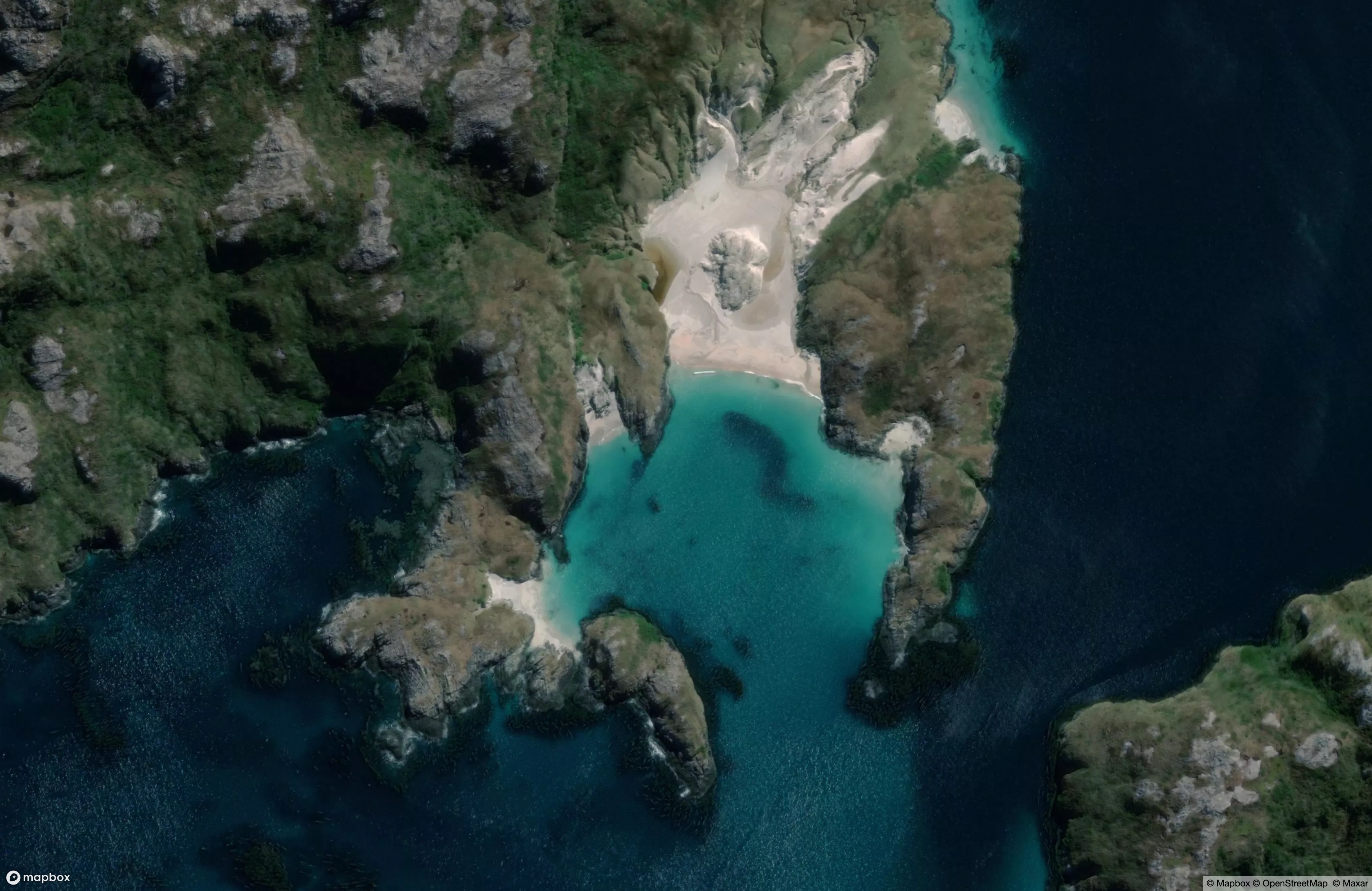
Robert Fitz Roy posted up near this perfectly-sheltered bay, out of the tearing winds of the Drake Passage, for seven days during his first expedition as commander of the HMS Beagle in 1829. He therefore named this cluster the “Week Islands” 🙄
Cover image: Petroglyphs at Tezirzek, photo by David Coulson MBE, 1997