Bukavu, Democratic Republic of Congo
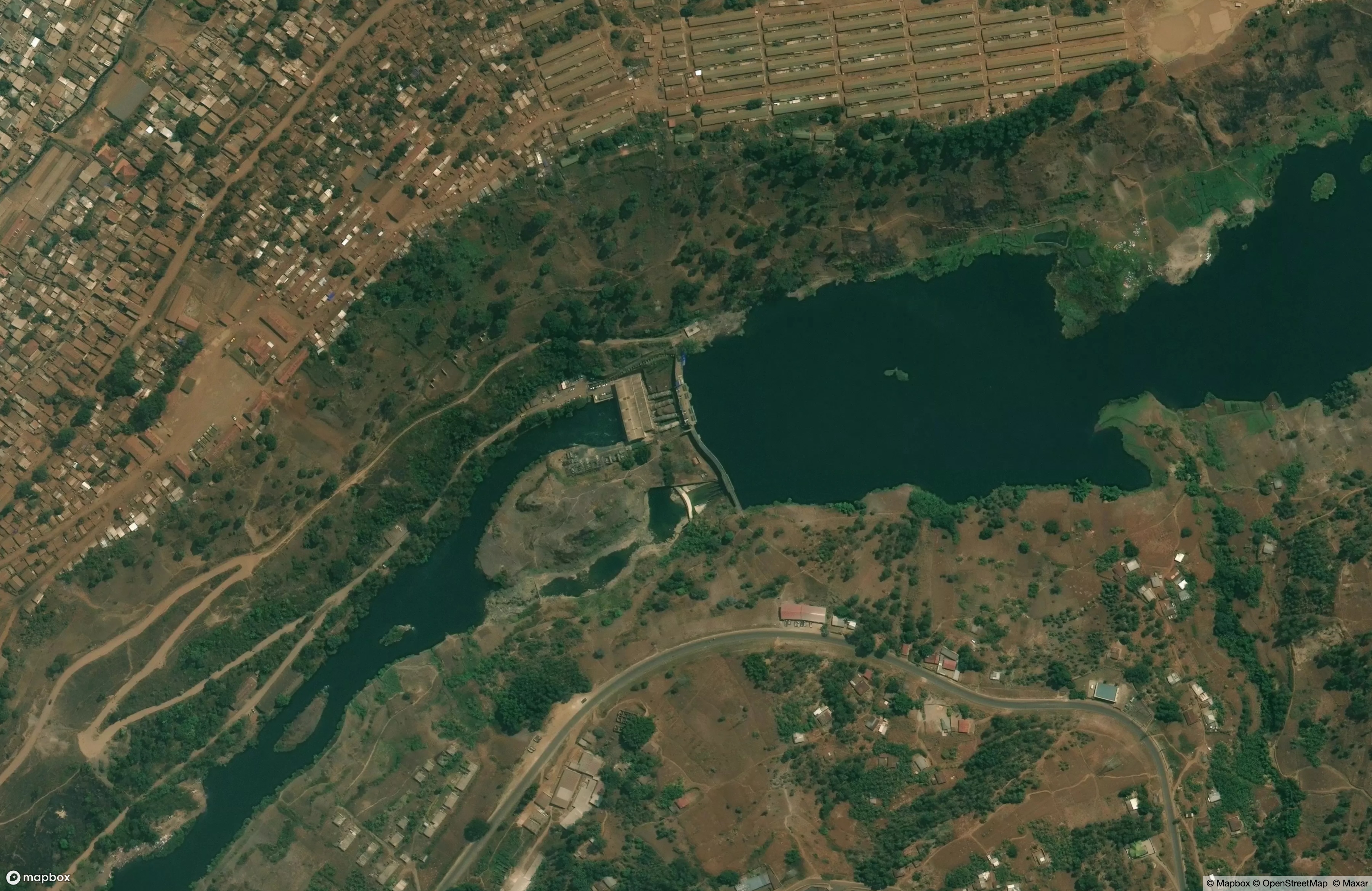
The Ruzizi river drains from Lake Kivu, and - like that large body of water - serves as the borderline between DRC and Rwanda. The Ruzizi I hydropower station straddles that border and sends electricity to the city of Bukavu, currently held by the Rwanda-backed M23 rebel group after they captured it in their major offensive one year ago. Fighting continues in some spots - DRC government forces recaptured the town of Uvira just to the South earlier this month, but M23 maintains its control in the Kivu region while multiple rounds of peace talks occur in Qatar and Togo.
The power station was built in the 1950s, and at its peak had a generation capacity of 30MW. This is now down to 10MW due to plastic pollution fouling the turbines, as well as to the difficulty of maintaining a cross-border facility in a region with an active war. Rwanda, meanwhile plans to build a much larger power station - 150MW - downriver, though the ongoing conflict and negotiations seem to have slowed the process.
Yas Island, Abu Dhabi
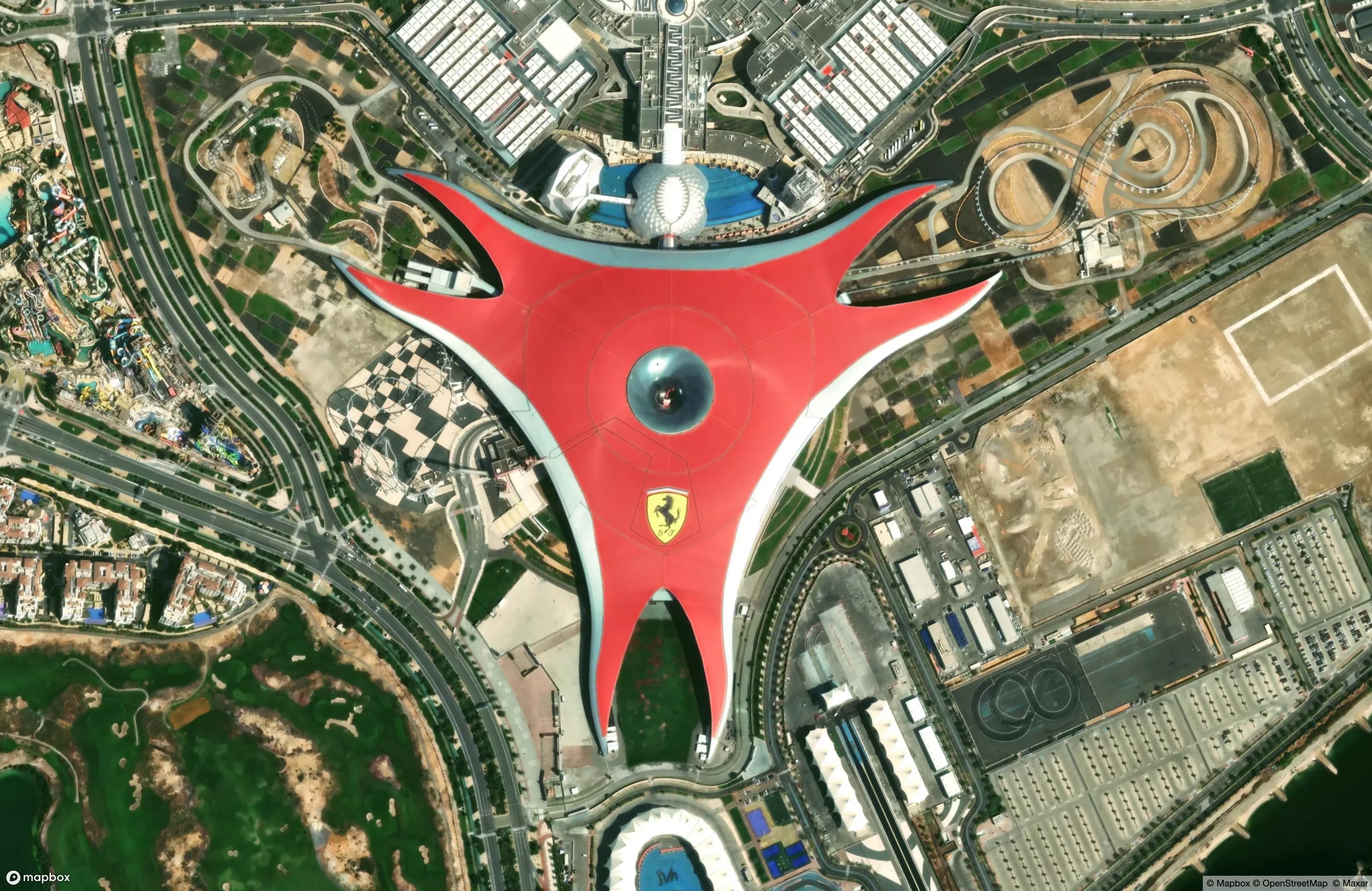
I’m not a car person, so my sense of racing history and culture is spotty at best. My understanding of the Ferrari name is entirely colored by Adam Driver’s portrayal of Enzo in the 2023 movie, so I struggle to reconcile that scrappy postwar Italian auto manufacturer with “Ferrari World”, perched here along the Persian Gulf, just off the understatedly-named (10-lane) Sheikh Khalifa Bin Zayed Street. It’s a massive pavilion in the desert, shaped like a biohazard warning, and hosting six rollercoasters among a plethora of other amusements. Next door is a waterpark, an Ikea, a SeaWorld(!), and the fabled Yas Marina Circuit, host of the F1 Abu Dhabi Grand Prix, and surfaced with pavement shipped in from Shropshire, England.
Were I to be dragged to Ferrari World upon a pleasant winter’s day, I think I would be more drawn to “The Italian Zone” there, a Disneyish simulacrum of a street in the Modenese city of Maranello, where you can walk poured-concrete cobbles between souvenir shops and cafes, gilded with age-painted styrofoam stucco and dripping with plastic plants. I might visit Mamma Rosella, a cafeteria-style restaurant (named for a legendary cook-to-the-F1-drivers-of-Fiorano) where to be honest the Bolognese looks respectable, and I might sit “streetside” and consider how much this reminds me of The Venetian in Las Vegas, rather than any of the actual Italian towns I’ve been privileged enough to visit in my time. And then I might consider how I actually loved The Venetian, with its ceiling that comes the closest to a real sky that I’ve ever seen indoors, and its celebrity-chef restaurants offering . . . respectable Bolognese. You know, I might actually have a great time in that corner of Ferrari World, because sometimes a theme-park-version of a real place is inexplicably comforting and I can’t spend my whole life being a cynical critic.
Kujalleq, Greenland
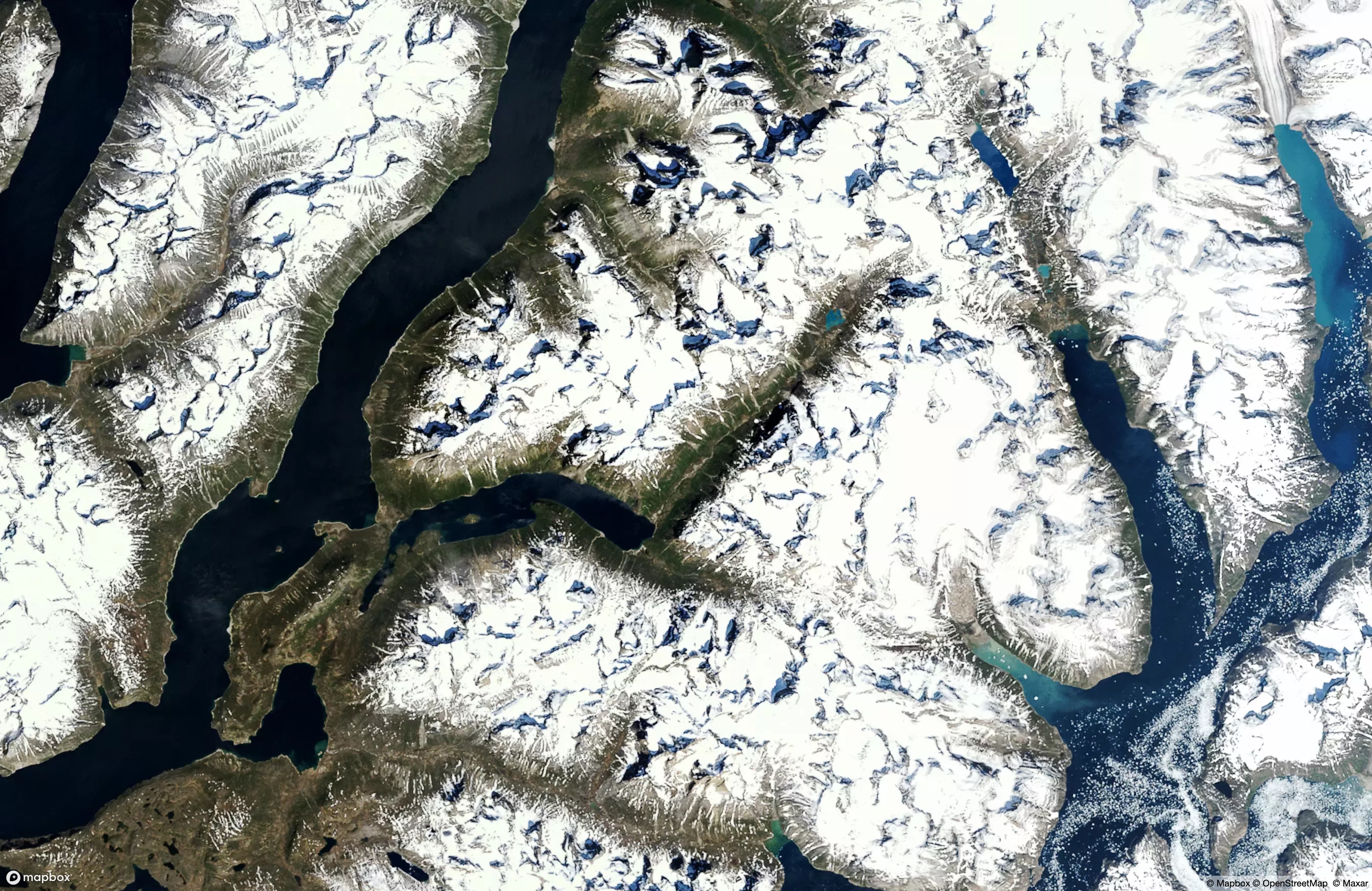
Oh Greenland, who would have guessed that you’d become the focus of a petty tyrant? Your gift to the world is all the water locked up in your great ice sheet, which is where we’d prefer it stay rather than calving off into the Atlantic and hastening a global Atlantic Meridional Overturning Circulation (AMOC) shutdown. But alas, it seems you’ve got some minerals too, and a place on the map that distorts both your size and your geopolitical importance to small-minded men. One thing we know you don’t have is many people, or crops, or much of anything growing on the ground. Right?
But what is that in the center of the image above? It’s a 10-mile-long valley, toward the Southern tip of the island. It’s u-shaped, glacially-carved like everything else here, but it’s greener than we might expect it to be. I hesitate to use the word “verdant”, but it’s almost appealing and cozy in the way it’s sheltered from Fjord winds by the peaks around it. Indeed, this is the Qinguaa Valley, home to the only forest in Greenland. It’s a little oasis of plant life where a shrub can stick its head up several meters off the ground without being battered into oblivion by the fierce inhospitality of the weather. It’s a place where we might hypothetically drop off certain world leaders, maybe with a tent and some supplies, and a note saying “Welcome to the Greenhouse of Greenland. You can’t do any harm from here. Stay warm and try not to bother the trees.”
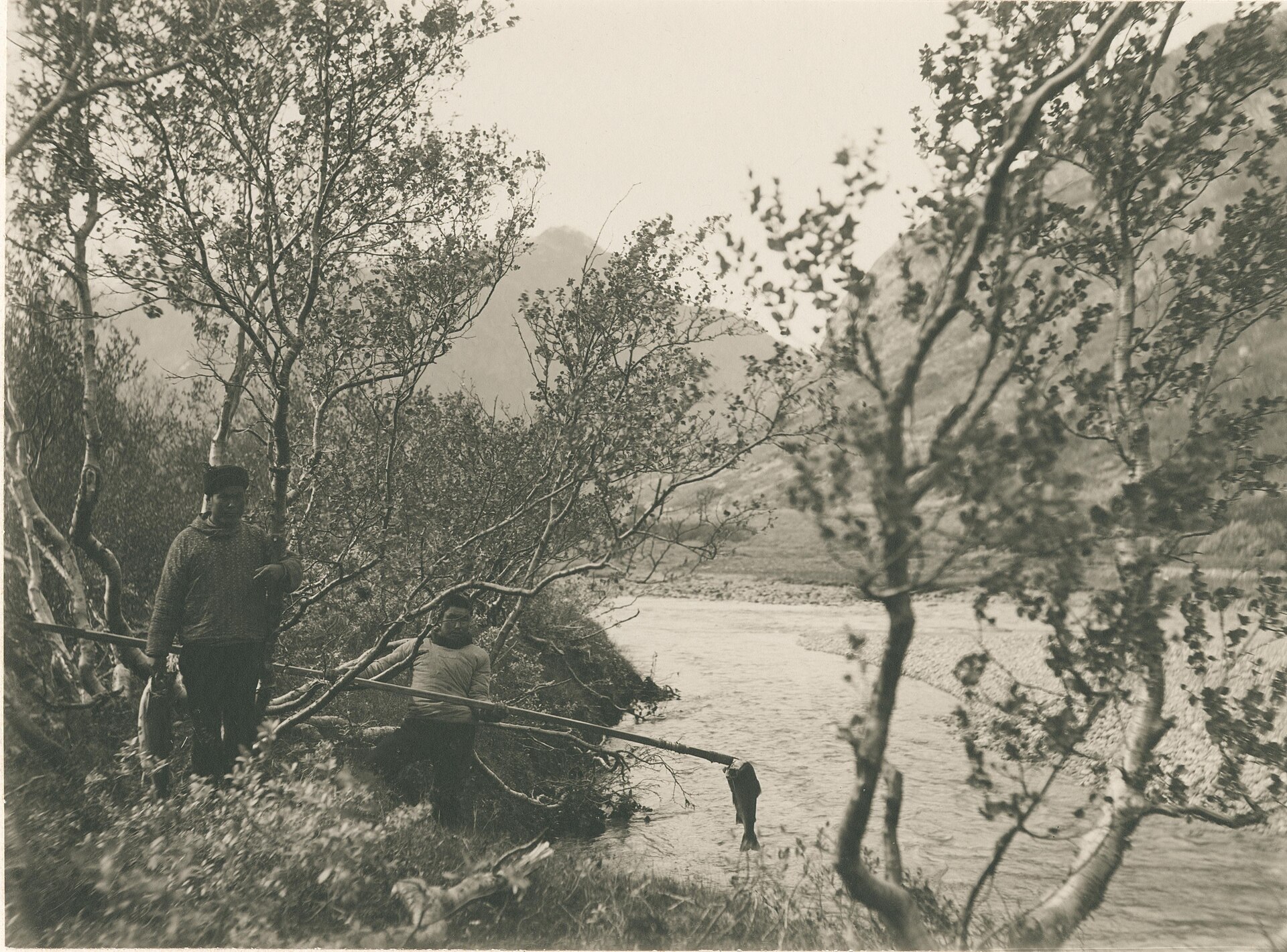 “Trees in the Qinngua valley”, 1900, by Thomas Neergaard Krabbe, provided by the National Museum of Denmark
_Greenland._Salmon-trout_fishing_in_the_Qinngua_valley_(12168736363).jpg)